
Table of Contents
Key Takeaways
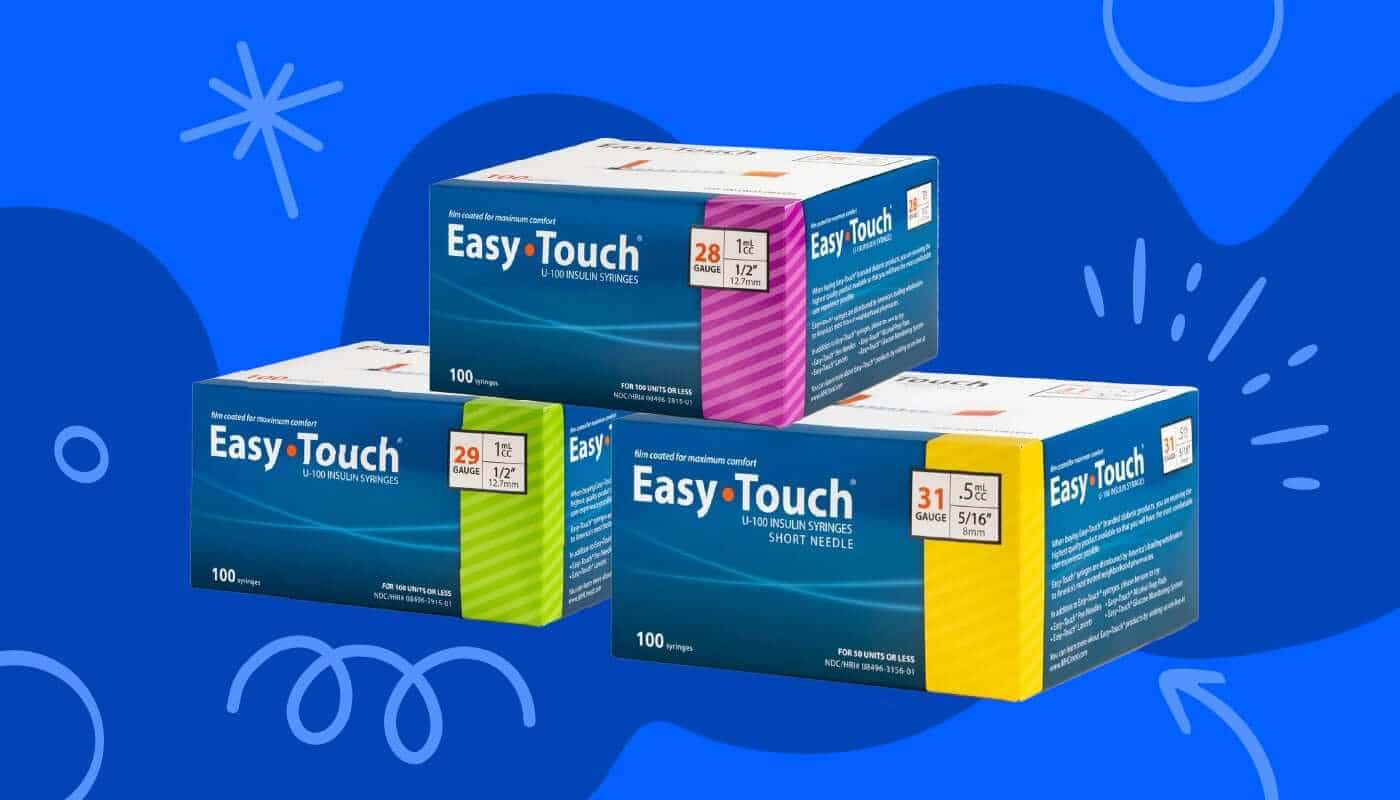
EasyTouch insulin syringes come in 28G, 29G, 30G, and 31G, with a higher number equivalent to a thinner needle.
Use a barrel that matches your dose; for example, a 0.3 cc syringe marks 1 unit per line and is best for smaller doses, while a 1 cc syringe marks 2 units per line and can hold larger doses.
Studies suggest shorter needles are preferred for everyone who injects, regardless of body size, and have the least risk of hitting muscle tissue.
Picking the right syringe is key when it comes to taking insulin. The barrel size determines how accurately you can measure a dose, while the gauge determines how much you feel the injection. Needle length also lets you know whether the insulin will be injected into the fat layer where it needs to be or in the muscle where the absorption can be quick and unpredictable. EasyTouch insulin syringes are popular options that come in four gauges, three barrel sizes, and two needle lengths. Here is how to read the numbers on the box and pick the right insulin syringe.
What Makes an EasyTouch Insulin Syringe Different?
EasyTouch insulin syringes are U-100 syringes, which means they’re made for insulin that contains 100 units per milliliter, the standard for most insulin in the U.S. The markings on the syringe only give the right dose when used with U-100 insulin. Otherwise, a different insulin concentration could lead to a dosing mistake.
The needle is triple-beveled, electro-polished, and silicone-coated for more comfort, as it can enter the skin with less friction. The needle is also attached to the syringe, which helps reduce insulin left behind in the base. There’s a different color for each gauge, and a box normally costs around $20.
EasyTouch U-100 Insulin Syringes - 31G .3CC 5/16" - Box of 100
$ 19.99
$ 23.86
Comfort meets syringes; the Easy Touch Insulin Syringes 31 Gauge Needle is film coated for maximum comfort and lines up precisely for accurate dosage. They have no "dead space" for accurate dosage and less waste. 100% latex free. Easy Touch Insulin Syringes… read more

How Do You Read the Numbers on the Box?
Barrel Size Controls Dosing Accuracy
EasyTouch offers 0.3 cc (30 units), 0.5 cc (50 units), and 1 cc (100 units) barrel sizes. It’s best to choose the smallest barrel that can hold your full dose in one draw. Each line on a 1 cc syringe equals 2 units, while a line on a 0.5 cc or 0.3 cc syringe equals 1 unit.
Gauge Decides Thickness and Comfort
With gauge numbers, the higher numbers mean thinner needles, and for most people, thinner needles are more comfortable. The only factor to consider for a 31G needle is that it may take longer to draw from a vial, although that’s often a minor inconvenience.
Needle Length Affects Where the Insulin Goes
EasyTouch insulin syringes come in 1/2 inch (12.7 mm) and 5/16 inch (8 mm) lengths. Insulin needs to be injected subcutaneously, or just under the skin into the layer of fat. While the 12.7 mm needle usually needs to be inserted into a pinched skin fold, the 8 mm needle can go directly into the skin at 90 degrees.
EasyTouch Pen Needle - 31G 1/4" - BX 100
$ 15.90
$ 19.30
The EasyTouch Insulin Pen Needle is film coated for maximum comfort and lines up precisely for accurate readings. Multi-facet needle bevel with lubricant coating allows for a more smooth and comfortable injection. EasyTouch Pen Needle Features: Securely attached needle eliminates… read more

What Does the Research Say About Needle Length?
The skin at most injection sites is around 2 mm thick. This depth doesn’t change much, even in people of different sizes. That means an 8 mm needle is usually sufficient to reach into the subcutaneous layer. A 12.7 mm needle may come with an increased risk of going deeper and hitting the muscle.
Many guidelines suggest the shortest available needle for injecting medication. Even studies in adults with obesity showed that shorter needles controlled blood sugar just as well as longer needles. In addition, they caused less pain and led to less medicine leaking from the injection site.
Technique is also important, since rotating injection sites can help prevent lipohypertrophy, or rubbery patches that form over overinjected sites. Reusing needles can dull the tips and make it uncomfortable to inject.
Which EasyTouch Insulin Syringe Should You Choose?
Start with your typical dose. Every box of 100 costs nearly the same, so there is no extra cost for picking the one you need.
EasyTouch Syringe | Needle | Dose Range & Markings | Best For |
|---|---|---|---|
31G, 0.3 cc, 5/16 in. | 31 gauge x 8 mm | Up to 30 units, 1-unit lines | Small, precise doses, children, fine titration |
31G, 0.5 cc, 5/16 in. | 31 gauge x 8 mm | Up to 50 units, 1-unit lines | A common default for most adults on basal-bolus insulin |
30G, 1 cc, 5/16 in. | 30 gauge x 8 mm | Up to 100 units, 2-unit lines | Large doses you would otherwise split into two shots |
30G, 1 cc, 1/2 in. | 30 gauge x 12.7 mm | Up to 100 units, 2-unit lines | Anyone who is used to a longer needle and a pinched 45-degree injection |
29G, 0.5 cc or 1 cc, 1/2 in. | 29 gauge x 12.7 mm | Up to 50 or 100 units | A faster draw and less needle flex |
28G, 1 cc, 1/2 in. | 28 gauge x 12.7 mm | Up to 100 units, 2-unit lines | The stiffest option, usually only if a healthcare provider recommends it |
The Three Worth Stocking
The 31G 0.5 cc 5/16 in. needle is the best all-around pick for adults on basal-bolus insulin. It carries 50 units, has single-unit markings, and comes in the thinnest gauge with a short needle. Step down to the 31G 0.3 cc for doses under 30 units or up to the 30G 1 cc if you need a larger single dose over 50 units.
EasyTouch U-100 Insulin Syringes - 31G .5cc 5/16" - Box of 100
$ 19.99
$ 23.86
Comfort meets syringes; the EasyTouch Insulin Syringe is film coated for maximum comfort and lines up precisely for accurate dosage. They have no "dead space" for accurate dosage and less waste. 100% latex free. The EasyTouch 31 gauge insulin syringe provides… read more

How to Inject With an EasyTouch Syringe
Here are some general steps to follow when using an EasyTouch insulin syringe.
Always wash your hands before handling any supplies, check the expiration date on the vial, and use an alcohol pad to wipe the stopper.
Pull the plunger back to measure your dose and push the air into the vial to prevent a vacuum.
Invert the vial, draw past your dose, and push back to the exact line of your dose.
Flick out any bubbles and inject the dose into the abdomen, outer thigh, buttock, or back of the arm, at least an inch from the last injection site.
Insert a 5/16 in. needle at 90 degrees into flat skin or a ½ in. needle at 45 degrees into a pinched skin fold.
Push the plunger down gently, and then count to 10 before taking the needle out.
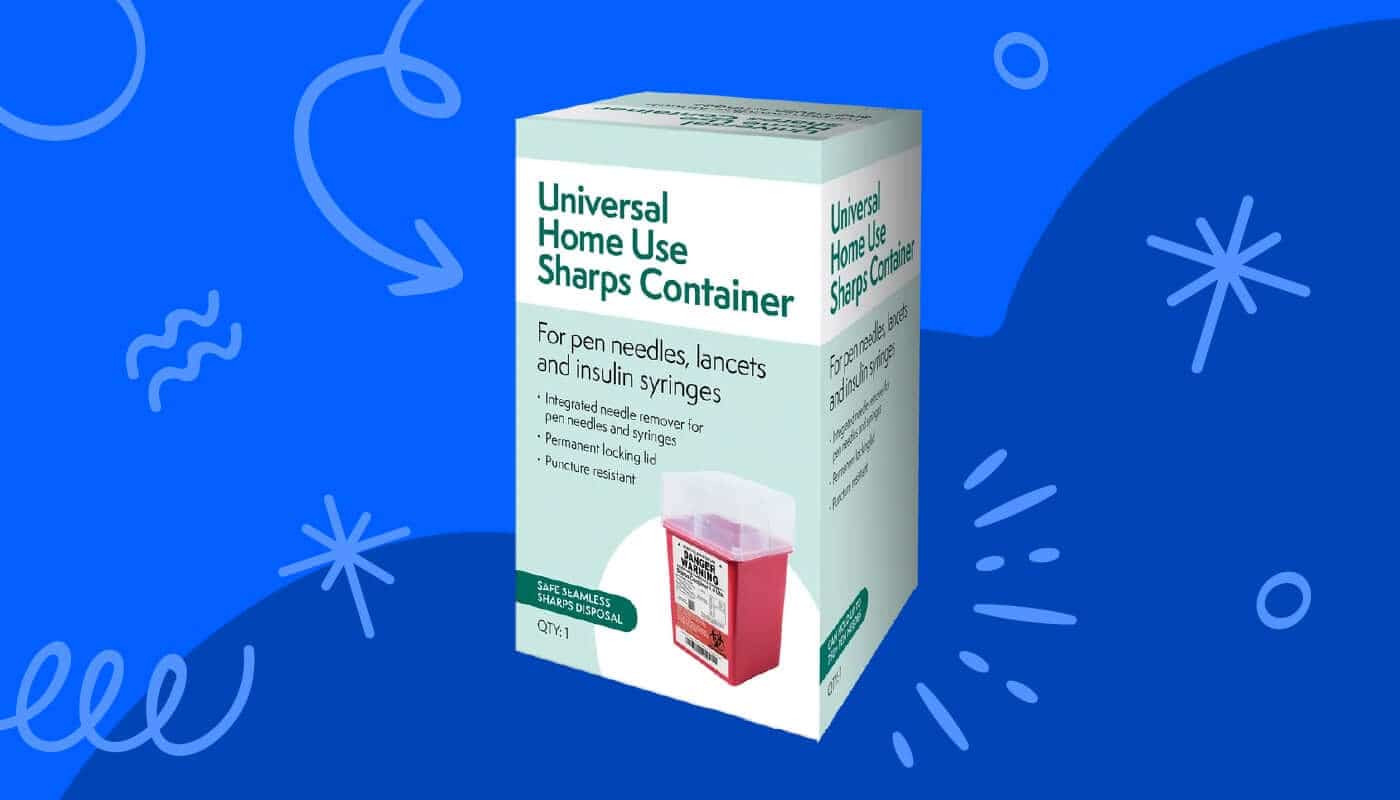
Drop the syringe into a sharps container. Do not reuse a syringe needle.
The FDA recommends a sharps container or a heavy-duty plastic container with a tight lid to dispose of needles. Ask your pharmacy or check online for drop-off sites when these containers are full.
Syringes vs. Pen Needles vs. Pumps
Compared to other options, syringes are usually cheaper and offer more options for dosing. With a syringe, you can mix two insulins in one shot, dose single units, and draw from any vial. Pen needles are used with injection pens and can be found in lengths as short as 4 mm. Insulin pumps are usually used with a continuous glucose monitor and can help with automating basal insulin dosing. Still, having syringes on hand can be helpful, especially when you need a backup if other options don’t work.
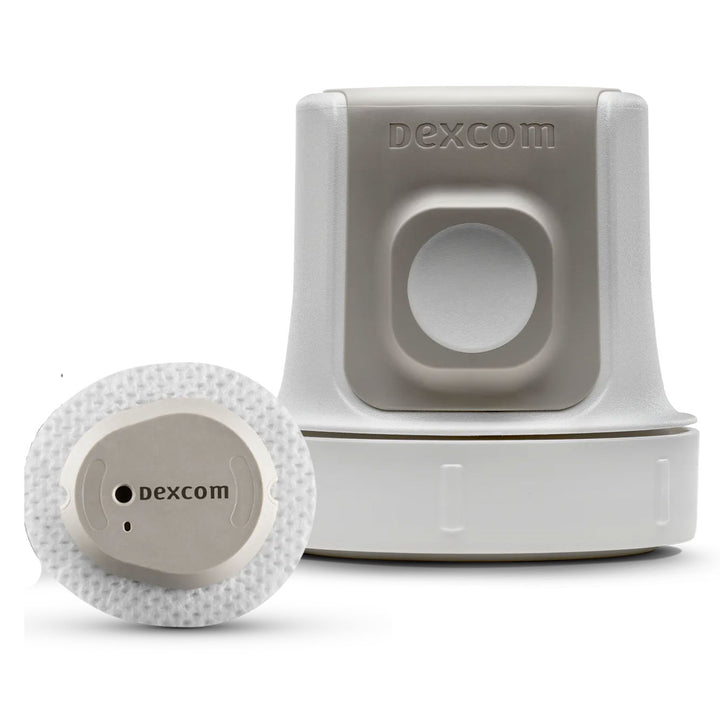
Dexcom G7 CGM System
$ 166.85
$ 205.99
The Dexcom G7 Continuous Glucose Monitoring System (CGM) is a comprehensive system that has changed the way individuals living with diabetes have monitored and maintained their blood glucose levels. Dexcom G7 is for patients two years and older with any type… read more
The Bottom Line
For most adults, EasyTouch insulin syringes with a 31G 5/16 in. needle are enough to hold a full dose while providing the most comfort. In any case, it’s important to rotate injection sites and use a new syringe every time. You can compare potential costs for different gauges and sizes in the insulin syringe collection from Total Diabetes Supply.
Sources
Insulin, Medicines, & Other Diabetes Treatments, National Institute of Diabetes and Digestive and Kidney Diseases
Intramuscular Risk at Insulin Injection Sites — Measurement of the Distance from Skin to Muscle and Rationale for Shorter-Length Needles for Subcutaneous Insulin Therapy, Diabetes Technology & Therapeutics (2014)
New Insulin Delivery Recommendations, Mayo Clinic Proceedings (2016)
Safety and Efficacy of Insulin Therapy Delivered via a 4mm Pen Needle in Obese Patients With Diabetes, Mayo Clinic Proceedings (2015)
Nontraditional Considerations With Insulin Needle Length Selection, Diabetes Spectrum (2015)
Advance Insulin Injection Technique and Education With FITTER Forward Expert Recommendations, Mayo Clinic Proceedings (2025)
Prevalence and Risk Factors of Lipohypertrophy in Insulin-Injecting Patients with Diabetes, Diabetes & Metabolism (2013)
The Injection Technique Factor: What You Don't Know or Teach Can Make a Difference, Clinical Diabetes (2019)
Safely Using Sharps (Needles and Syringes) at Home, at Work and on Travel, U.S. Food and Drug Administration
FAQs
What Gauge Is Best for Insulin Injections?
The best gauge will depend on what works for you. The 31G EasyTouch syringes are the thinnest for that product line and can be a good starting point. Thicker 28G and 29G needles fill faster and flex less, but they may cause more discomfort.
Do You Need a Prescription for EasyTouch Insulin Syringes?
Most states allow insulin syringes to be purchased without a prescription. However, it’s best to check your state’s rules or ask your local pharmacy directly.
Can You Reuse an EasyTouch Syringe?
It’s not recommended to reuse syringes. Reusing needles can dull their tips and increase the risk of thickened skin or infections at an injection site.
What Is the Difference Between a 0.3 cc and a 1 cc Insulin Syringe?
The difference lies in the amount of medicine they can hold and how accurately doses are measured. A 0.3 cc syringe holds up to 30 units and measures 1 unit per marking, while a 1 cc syringe can hold up to 100 units and measures 2 units per marking. It’s recommended to use the smallest barrel that holds your entire dose.