
Table of Contents
Key Takeaways
HbA1c tells you about your average blood sugar over the last 2-3 months
Results fall into normal, prediabetes, and diabetes ranges, but should be interpreted alongside your overall health
For people with diabetes, HbA1c targets are individualized, with many aiming for around 7% or below
At-home HbA1c tests can help you to track trends between appointments, but should complement (not replace) medical care
A Number With a Story
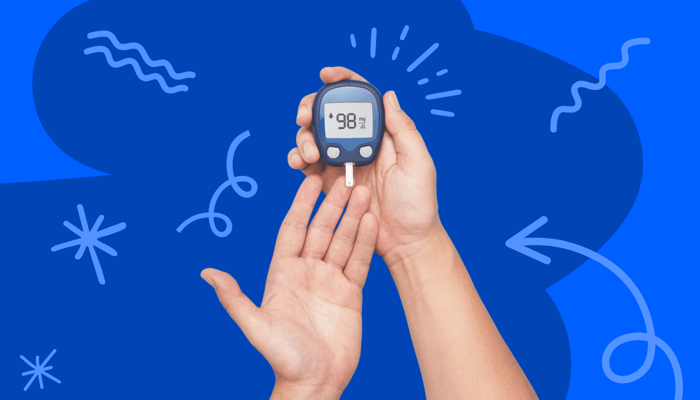
When you check your blood sugar with a finger-prick test, you’re seeing a snapshot of how your glucose levels are doing at that moment.
Your HbA1c is a bit different to this, it doesn’t just look at how your blood sugar is today or yesterday, it’s a 2-3-month narrative. It looks at what’s been happening over a longer timeframe, after meals, overnight, during stressful weeks, and in between any of your usual glucose measurements.
What is HbA1c?
Hemoglobin A1c (HbA1c), sometimes called “A1c”, is a blood test showing your average blood glucose levels over the past 2-3 months (1).
This test measures something called “glycation” which is where the glucose in your blood sticks to hemoglobin, the protein in red blood cells that gives blood its bright red color and carries oxygen around your body. The more glucose in your blood, the more it attaches to the hemoglobin, and the higher your HbA1c result.
The normal life span of a red blood cell is usually between 2 and 3 months, so HbA1c reflects that entire period. That’s why this test is so useful, it shows overall trends, not just a single day.
What Do the Numbers Mean?
HbA1c results are often reported as a percentage (2,3):
Normal: below 5.7%
Prediabetes: 5.7% to 6.4%
Diabetes mellitus: 6.5% and above
These are not strict cut-offs in isolation. Instead, the numbers represent a continuum of risk, and results are interpreted based on each person's risk factors, symptoms and overall health.
For people already diagnosed with diabetes, HbA1c targets are set based on individual circumstances. The American Diabetes Association recommends a target A1c of 7% or below, although this can vary.
A tighter target (with HbA1c levels closer to normal) might be appropriate during pregnancy, whereas in people who have frequent low blood sugar levels, hypoglycemia unawareness, or those with other health conditions, it might be safer to set a higher target of less than 8% (1).
Tracking Matters More Than a Single Result
While HbA1c is useful, a single result only gives part of the picture. Looking at how your levels change over time is often more informative.
Regular monitoring, whether through routine healthcare appointments or, in some cases, using A1c self check kits, can help you to:
Track longer-term blood sugar patterns
Monitor the influence of lifestyle changes on your glucose levels
Stay engaged with your own health data
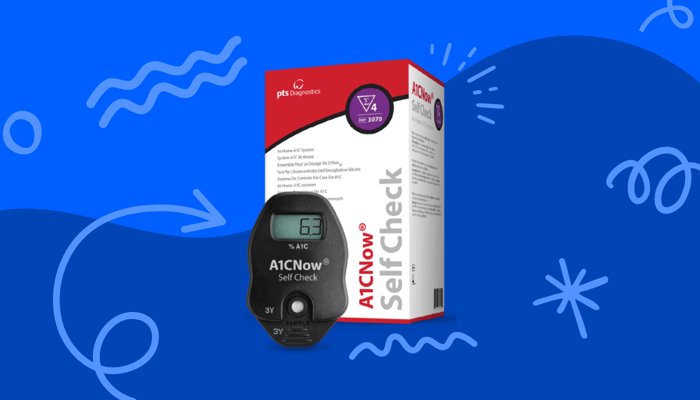
A1CNow® Self Check - 4 Count Test Kit

$ 55.00
$ 109.19
A1C is a window into your overall blood glucose control, spanning the past two to three months. The A1CNow® Self Check system provides a quick and easy way to get accurate HbA1C results at home that you can use to… read more
It’s important that any HbA1c test, whether done in a clinic or at home, uses a validated and standardized method, as this helps ensure the result is accurate and reliable. Many reputable home testing kits are designed to meet these same quality standards.
When used appropriately, A1c home tests can be useful for monitoring trends between appointments. However, they’re best used as a complement to, not a replacement for, medical care, and any significant changes or concerns should always be discussed with your doctor.
What Should You Do With Your Result?
It’s good to think of your HbA1c as a guide. The right approach depends on your result and whether you have already been diagnosed with diabetes.
If Your HbA1c Is <5.7%
This usually suggests your blood sugar levels are within a normal range.
If you’re checking as part of general health, then continue to stay active and eat well.
Most adults should start regular screening around age 35, even if they feel well (4).
Your doctor may recommend repeating the test at least every 3 years, or sooner if you have risk factors such as a family history of diabetes, high blood pressure, high cholesterol, certain ethnic backgrounds, physical inactivity, or conditions like PCOS (4).
If Your HbA1c Is 5.7%-6.4% (Prediabetes)
This means that your blood sugar is higher than normal, but not yet in the diabetes range. It can indicate a higher risk of developing Type 2 diabetes.
Sometimes, this can be a window of opportunity to make consistent lifestyle changes.
People with prediabetes are generally advised to repeat HbA1c testing yearly to track trends and catch any early changes (4).
If Your HbA1c Is 6.5% or higher
If this is a new result:
A single HbA1c result in the diabetes range doesn’t always mean a diagnosis straight away. In most cases, the test needs to be repeated to confirm the result. The exception is when someone has classic symptoms of high blood sugar along with a clearly high glucose reading. In that situation, a diagnosis may be made without waiting for a second test (5)
Follow up with a healthcare professional for evaluation and guidance.
If you already have diabetes:
This might indicate that your current management plan (lifestyle, medications, or monitoring) needs adjustment.
The ADA generally recommends checking HbA1c every 3 months if your glucose levels aren’t stable or if you have changed treatment plans. It can be checked every 6 months if your glucose is stable and within your target range (6).
Ongoing Monitoring
Even if your diabetes is well-controlled, regular HbA1c testing, combined with daily glucose checks, can give you a clearer picture of your blood sugar over time.
When HbA1c Can Be Misleading
While HbA1c is recommended as a diagnostic tool for diabetes by the World Health Organisation (WHO), it’s not perfect and there are certain limitations (7).
In some situations, the result might not accurately reflect your true blood sugar levels. This is because the test depends on red blood cells, so anything that affects their lifespan or the type of hemoglobin they contain can skew the results.
Situations where HbA1c may be less reliable include (8)(9)(10):
Certain types of anemia (including iron-deficiency, vitamin B12 or folate deficiency, and hemolytic anemia)
Hemoglobin variants (like sickle cell disease or thalassemia)
Chronic kidney disease
Recent blood loss or blood transfusion
Pregnancy
In these situations, HbA1c may appear either falsely high or falsely low, so it’s not always used on its own to diagnose or monitor diabetes.
If your result doesn’t align with your symptoms or other test results, your doctor might recommend additional tests like fasting blood glucose, an oral glucose tolerance test (OGTT), or continuous glucose monitoring, to get a clearer picture.
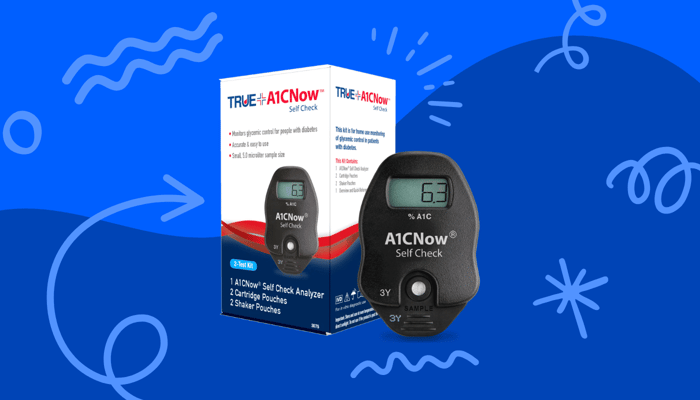
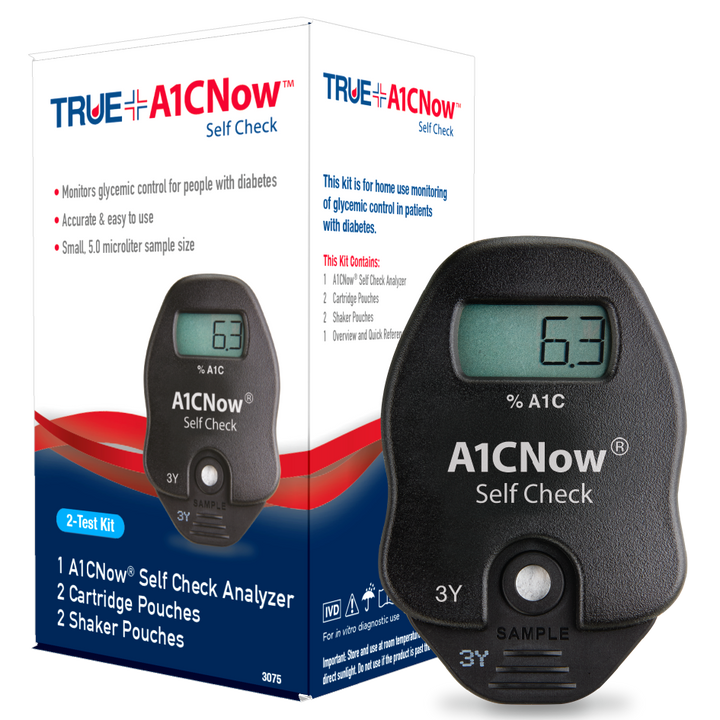
TRUEplus A1CNow Self Check Test System - 2 Count Test Kit
$ 46.34
$ 57.99
TRUE+A1CNowTM Self Check Test System Features: Results in 5 minutes Small (5 µL) fingerstick blood sample No maintenance Room temperature storage Small, compact, and battery powered Affordable and easy to use Includes A1CNowTM Self Check Analyzer 2 Cartridge Pouches 2… read more
Bottom Line
Your HbA1c is really useful for understanding long-term blood sugar control. A single result tells you something, but trends over time tell you more. It’s important to look at the broad picture including your symptoms, daily glucose readings, and overall well-being when trying to understand your metabolic health. Whatever the number, it’s a starting point for a conversation with your healthcare team.
References
American Diabetes Association. Health Checks for People with Diabetes. https://diabetes.org/living-with-diabetes/newly-diagnosed/health-checks-people-with-diabetes
Eyth E, Zubair M, Naik R. Hemoglobin A1C. StatPearls. 2025. https://www.ncbi.nlm.nih.gov/books/NBK549816/
Mehta M, Prasad A, Kalapureddy V, Narayanam H, Kondaveeti SB. Insights into HbA1c: Key Role in Diabetes Screening and Associated Conditions - A Comprehensive Review. J Pharm Bioallied Sci. 2025. https://pmc.ncbi.nlm.nih.gov/articles/PMC12244728/
American Diabetes Association Professional Practice Committee for Diabetes*. 2. Diagnosis and Classification of Diabetes: Standards of Care in Diabetes-2026. Diabetes Care. 2026. https://pmc.ncbi.nlm.nih.gov/articles/PMC12690183/
American Diabetes Association Professional Practice Committee for Diabetes; Diagnosis and Classification of Diabetes: Standards of Care in Diabetes - 2026. Diabetes Care 2026; 49 (1) https://diabetesjournals.org/care/article/49/Supplement_1/S27/163926/2-Diagnosis-and-Classification-of-Diabetes
American Diabetes Association Professional Practice Committee for Diabetes. Glycemic Goals, Hypoglycemia, and Hyperglycemic Crises: Standards of Care in Diabetes - 2026. Diabetes Care. 2026; 49 (1) 6. Glycemic Goals, Hypoglycemia, and Hyperglycemic Crises: Standards of Care in Diabetes—2026
World Health Organization. Use of Glycated Haemoglobin (HbA1c) in the Diagnosis of Diabetes Mellitus: Abbreviated Report of a WHO Consultation. Executive Summary. Geneva; 2011. https://www.ncbi.nlm.nih.gov/books/NBK304263/
Hartog M D. Let’s Not Sugar Coat It: HbA1c is the Imperfect Diabetes Diagnostic. Mayo Clinic. 2022. https://www.pharmacytimes.com/view/let-s-not-sugar-coat-it-hba1c-is-the-imperfect-diabetes-diagnostic
Kaiafa G, Veneti S, Polychronopoulos G, Pilalas D, Daios S, Kanellos I, Didangelos T, Pagoni S, Savopoulos C. Is HbA1c an ideal biomarker of well-controlled diabetes? Postgrad Med J. 2021. https://pmc.ncbi.nlm.nih.gov/articles/PMC10016911/
Chao Y, Wan Z, Wu X, Qiu F, Wang Y, Ke P, Wu X, Xu J, Zhuang J, Huang X. Interference of Thalassemias on Hemoglobin A1c Measurement by Ion-Exchange High-Performance Liquid Chromatography Method Tosoh HLC-723 G8. Clin Lab. 2018. https://pubmed.ncbi.nlm.nih.gov/30146829/
FAQs
Can lifestyle changes affect my HbA1c?
Yes, your HbA1c reflects your average blood glucose levels over the past 2-3 months, so anything that influences your blood glucose can have an effect on the result. Lifestyle improvements in diet, exercise, sleep, and weight can all reduce HbA1c over time, especially in prediabetes and early Type 2 diabetes.
Do I need both HbA1c testing and daily blood glucose monitoring?
Yes, they provide different, but complementary information. HbA1c shows you the long-term picture, while daily glucose monitoring tells you what's happening right now. Neither replaces the other.
Why this matters: your HbA1c might look good, but you could still have large daily spikes in blood sugar, or your daily readings may seem fine, but your overall average could be gradually creeping up.
If my HbA1c is normal, does that mean I don’t have insulin resistance?
Not necessarily. HbA1c reflects average blood glucose levels, but insulin resistance can exist before glucose levels show any significant rise.