
Table of Contents
Home blood pressure monitoring can be important to keep tabs on your cardiovascular (heart and blood vessel) health, especially if you have an existing condition or take certain medications. But choosing the right blood pressure monitor for home can be confusing.
If you’re considering an automatic wrist blood pressure monitor, you may appreciate its convenience and compact design. But they’re not reliable or accurate for everyone.
We’re here to help you decide if a wrist blood pressure monitor is right for you. Let’s discuss how they work, when they’re accurate, and what to look for when choosing the right one. But always ask your doctor if you’re unsure what’s best.
How Do Wrist Blood Pressure Monitors Work?
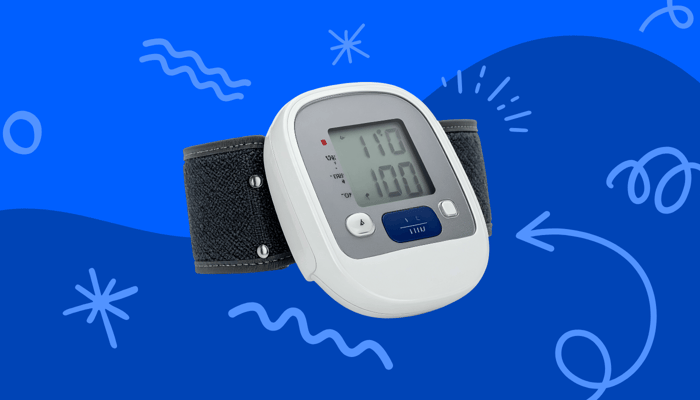
Automatic at-home blood pressure monitors, regardless of the measurement site, work similarly. Every set comes with an LED screen to display your results and a cuff to fit around the area. Once you secure the cuff around the measurement site, turn on the machine, allow the cuff to inflate and deflate, and then read your results on the screen a few seconds later.
When the cuff squeezes the area, it briefly stops blood flow in the local artery (a blood vessel delivering oxygen to the body). And as it deflates, the machine measures how blood flows back through the artery. The blood flow against the artery’s walls creates the pressure you want to measure.
Reading Blood Pressure Results
The results will show two numbers representing pressure in millimeters of mercury (mmHg), one above the other.
Systolic pressure: This is the top number, representing the pressure when the heart is pumping.
Diastolic pressure: This is the bottom number, representing the pressure when the heart is resting.
Both numbers are important to track. The standard healthy blood pressure reading is about 120/80 mm Hg, although people may have slightly higher or lower numbers depending on health-related factors. For example, many runners have lower blood pressure because their blood vessels remain more open and flexible, allowing blood to flow with less resistance and creating less pressure.
For reference, here are blood pressure ranges (in mmHg) and what they mean, according to the American Heart Association:
Normal: Less than 120 systolic and less than 80 diastolic
Elevated: 120–129 systolic and less than 80 diastolic
Stage 1 Hypertension (high blood pressure): 130–139 systolic and 80-89 diastolic
Stage 2 Hypertension: 140 (or higher) systolic and 90 (or higher) diastolic
Severe Hypertension: Higher than 180 systolic and higher than 120 diastolic without symptoms (chest pain, shortness of breath, back pain, numbness, weakness, change in vision, or difficulty speaking)
Hypertensive Emergency: Higher than 180 systolic and higher than 120 diastolic with symptoms (chest pain, shortness of breath, back pain, numbness, weakness, change in vision, or difficulty speaking)
See normal and high blood pressure (hypertension) ranges below, according to the American Heart Association.
Blood Pressure | Systolic (mmHg) | and/or | Diastolic (mmHg) |
Normal | <120 | and | <80 |
Elevated | 120–129 | and | <80 |
Stage 1 Hypertension | 130--139 | or | 80-89 |
Stage 2 Hypertension | ≤140 | or | ≥90 |
Severe Hypertension | >180 | and/or | >120 |
Hypertensive Emergency | >180* | and/or | >120* |
*With symptoms
Everyone is different, so your doctor can explain what your numbers mean for your unique health needs. If you have unusual and unexplained high or low blood pressure readings, especially if you’re experiencing symptoms, you should talk to your doctor as soon as possible.
How Accurate is a Wrist Blood Pressure Monitor?
Although all blood pressure monitors work similarly, the measurement site can impact your results.
Wrist blood pressure readings might be a few points higher than arm readings for many people. Research says that people could see a 5–15 mmHg difference (sometimes higher) in systolic pressure between the two sites, depending on the person and their health.
To get the most accurate and consistent wrist blood pressure measurements, you must follow the correct procedure every time, placing your wrist at heart level for each reading. We discuss the best steps for taking an accurate reading later.
Arm vs. Wrist Blood Pressure Monitoring
When you visit the doctor for a routine checkup, the nurse usually takes your blood pressure at the upper arm. This is because your brachial artery, a large blood vessel in the arm, is centrally located near the heart and provides reliable readings that closely represent general cardiovascular health.
You’re less likely to see clinicians take readings at the wrist because the local blood vessel, the radial artery, is small and sensitive to body position. Getting consistent and accurate results is more challenging, especially at home without professional guidance. One study found that positioning errors, like resting your wrist on your lap, easily lead to falsely high readings.
Arm blood pressure monitors are more accurate, consistent, and reliable. But wrist blood pressure monitors have a time and place.
Who Benefits From Wrist Blood Pressure Monitoring
Some people need an alternative to blood pressure monitoring on the arm. Two common reasons include:
Arm pain or intolerance: Some people may experience discomfort or pain in their upper arm during standard blood pressure readings. A wrist blood pressure reading would be more tolerable.
Larger arm sizes: Blood pressure cuffs are available in several different sizes, but some people may not fit into them. A poorly fitting cuff can lead to inaccurate results, so a wrist reading is a better option.
In these cases, a wrist blood pressure monitor can be more suitable. But they must be able to follow and remember directions, since these readings require a strict and consistent setup for the most accurate results.
6 Steps to Measure Wrist Blood Pressure
These are the six basic steps to taking wrist blood pressure. Check your specific monitor to see if its instructions require you to take extra (or slightly different) steps.
Set the scene: Choose a consistent time of day to take your blood pressure, and avoid bathing, eating, or drinking caffeine within 30 minutes of your reading. Always find a comfortable chair where you can sit up straight and place your feet flat on the ground.
Prepare your machine: Remove all jewelry from your hand and wrist. Wrap the wrist cuff about half an inch away from your wrist bone, with the LED display facing up.
Relax your body: Sit calmly for a moment with your legs uncrossed and feet on the floor.
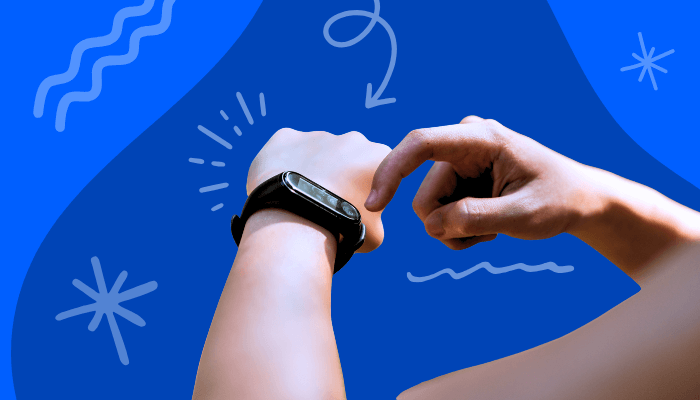
Take the measurement: Cross your arm over your chest, supporting it with your other hand. Your wrist with the monitor should hover over your heart as if you’re taking a pledge. Allow the monitor to complete the reading.
Record your results: Always keep a record of your results for future reference, especially if you’re tracking blood pressure to monitor a condition or the impact of a medication on heart health.
Repeat: Retake your reading after a minute or two to double-check results.
Remember your setup—it’s important to take your blood pressure the same way every time for accurate results.
Shopping for a Valid Wrist Blood Pressure Monitor and Cuff
Be careful shopping online for wrist blood pressure monitors. Research shows that not all blood pressure monitors are validated for precision and accuracy. This includes about 79% of all blood pressure machines and 83% of wrist cuff devices found on Amazon. If your blood pressure monitor isn’t validated, you won’t know if your results are accurate. Poorly monitored blood pressure could lead to serious health issues for some people.
Our shop at Total Diabetes Supply carries validated devices. We trust the Omron 3 Series Wireless Wrist Blood Pressure Monitor, which features built-in alerts to help you fit the cuff correctly and records your average blood pressure over the last three days to help you keep track. We also trust Clever Choice as a more budget-friendly option.
Bottom Line
Wrist blood pressure monitors can be helpful for those who don’t tolerate blood pressure readings at the arm, but validated devices are only accurate when used correctly. Always consult your doctor if you’re concerned about your blood pressure results, especially when you notice unexpected and unexplained changes outside of normal ranges.
FAQs
Are wrist blood pressure cuffs very accurate?
Wrist blood pressure cuffs can be accurate if you position your wrist at heart level. Most errors in blood pressure readings are due to poor positioning. It’s important to follow directions closely and repeat the same procedure every time you take a reading.
What is a normal blood pressure reading with a wrist cuff?
A normal blood pressure reading with a wrist cuff is 120/80 mmHg. This is the same for arm cuffs. However, some people may see a higher reading at the wrist compared to the arm. A slight difference is normal, but a larger difference could be a sign of a circulatory issue.
Which arm is more accurate for blood pressure?
Neither arm is more accurate than the other, but you should always stay consistent with the side and location you choose to take measurements.
What causes false high blood pressure readings?
When measuring blood pressure at home, high readings can be caused by positioning errors (such as placing the arm below heart level), discomfort (like a tight cuff or a full bladder), and having a stimulant (like coffee or nicotine) 30 minutes before a reading.